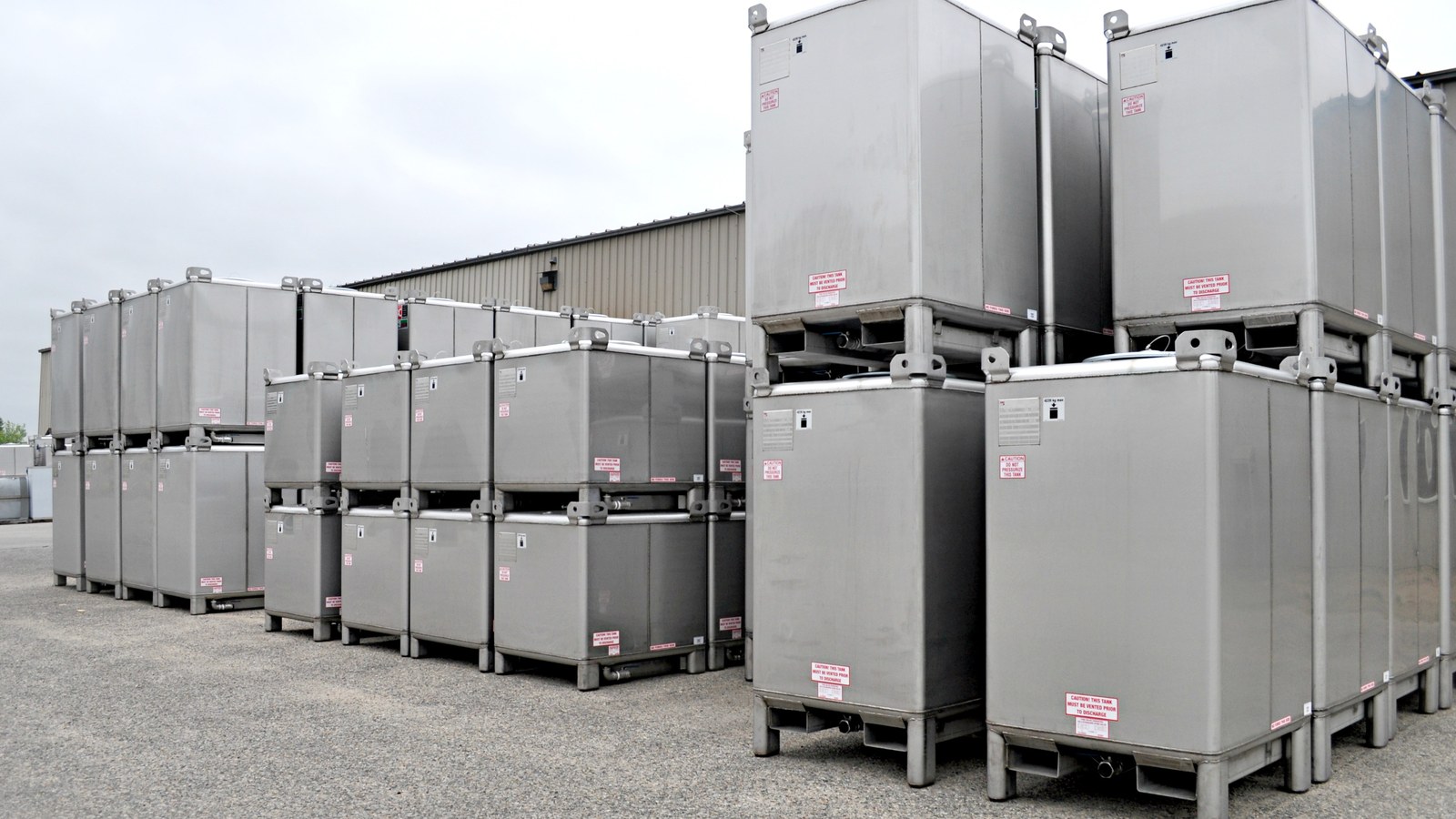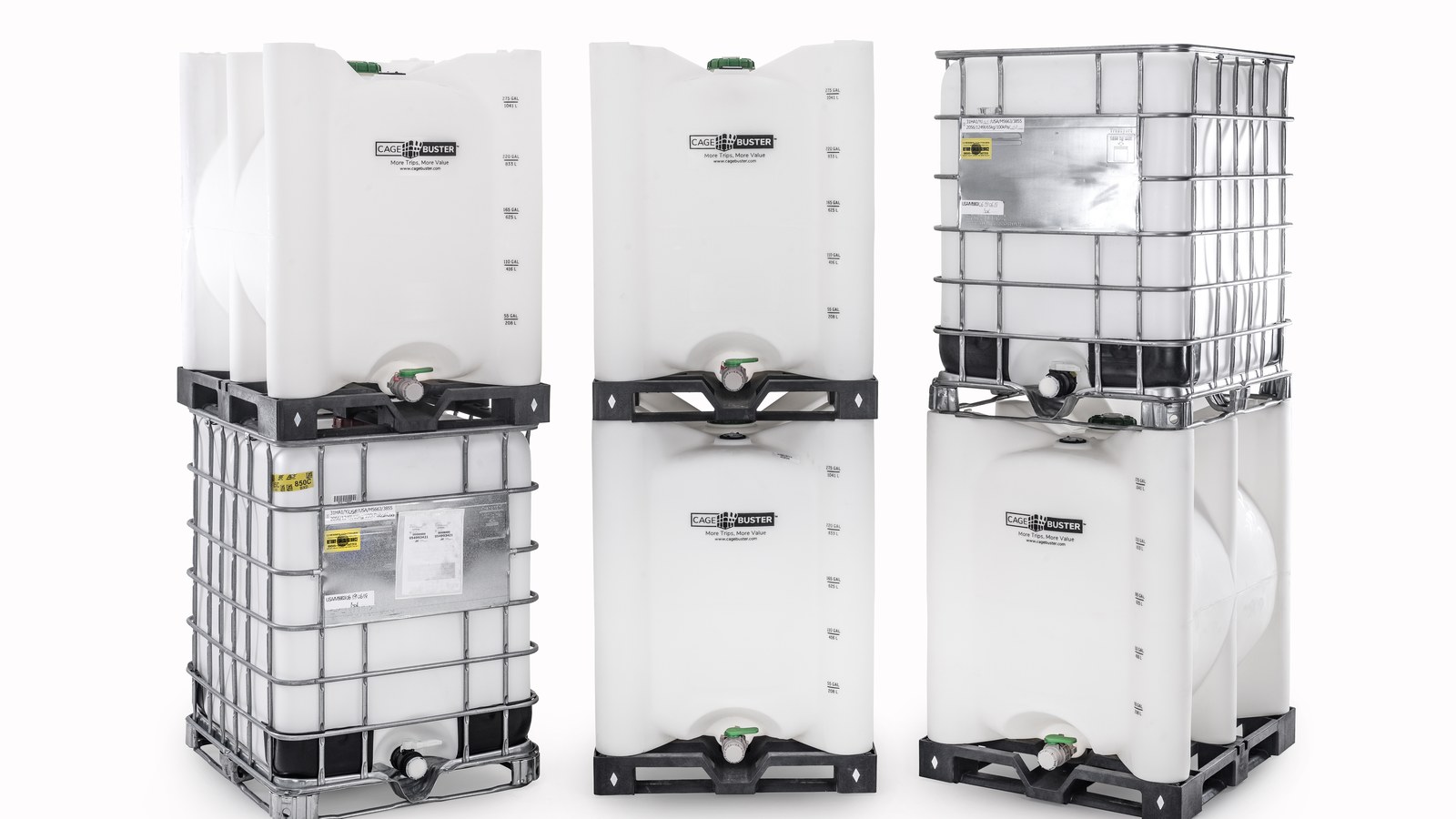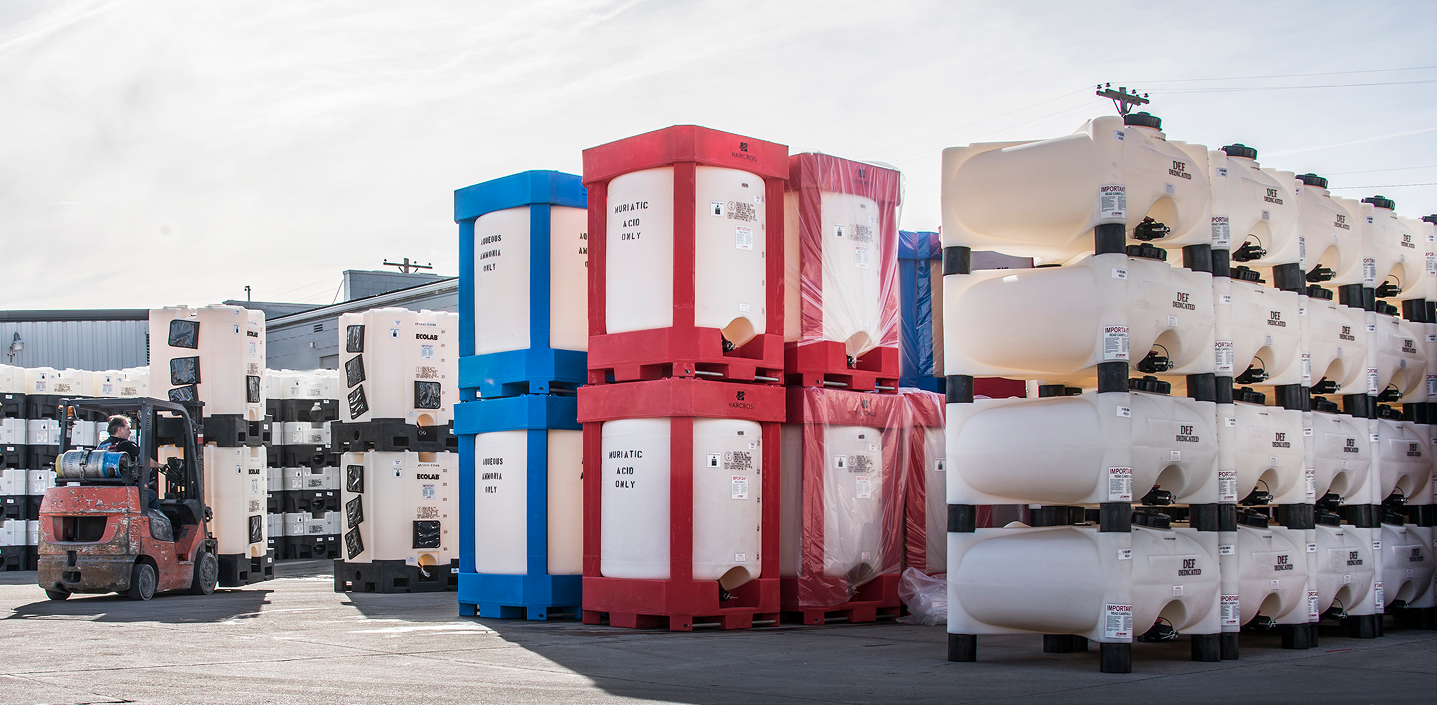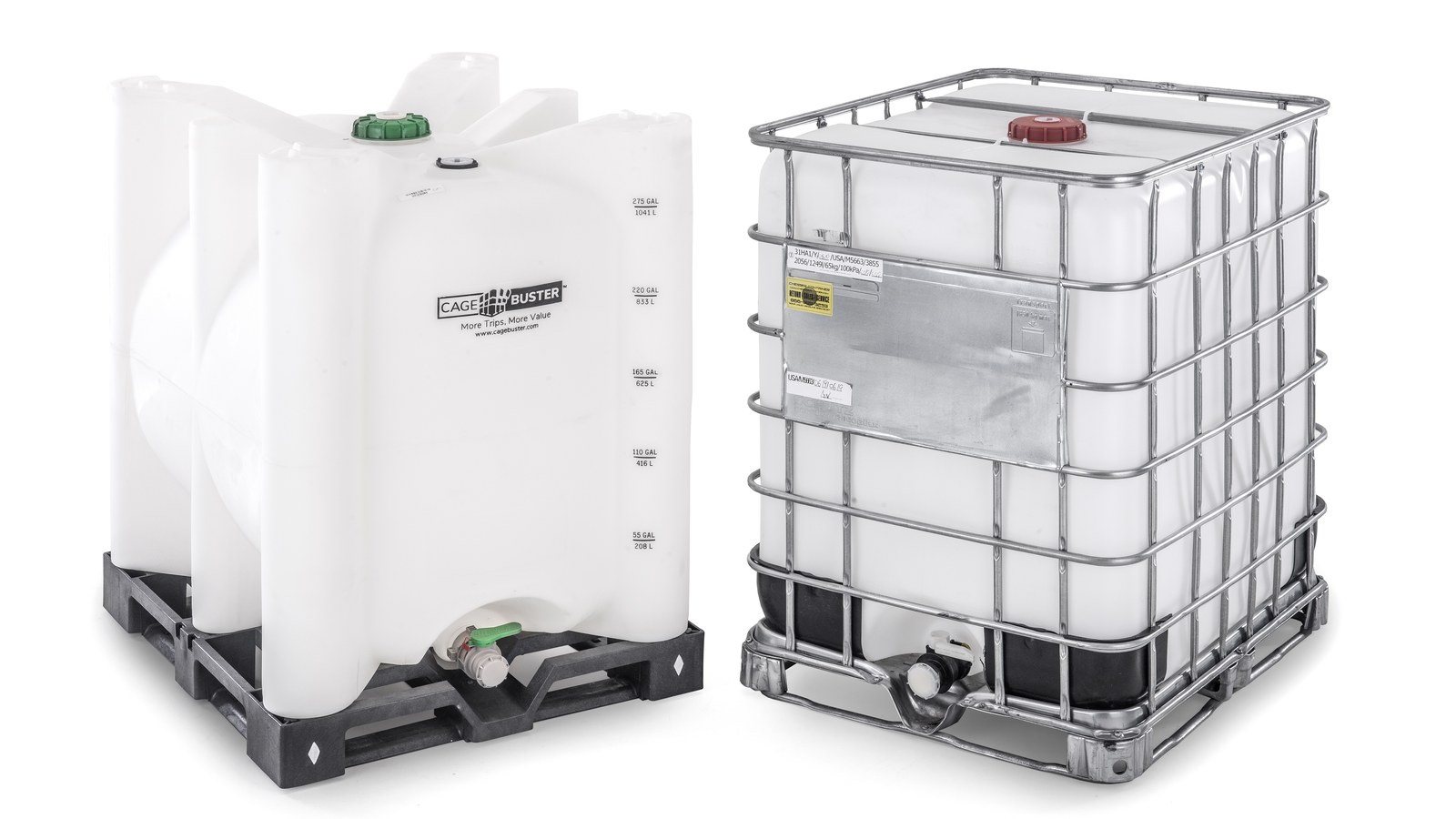
Two container families dominate bulk liquid handling in Canada, and buyers rarely get a straight comparison between them. Caged composite IBCs — a blow-moulded bottle inside a steel cage on a pallet — are the default for most operations. Cageless heavy-duty poly totes, often sold under the Cagebuster name, replace the cage with a much thicker single-piece wall. Both hold roughly 1,000 to 1,250 litres. They behave very differently once your product, your yard and your cleaning routine get involved.
Where caged composite totes win
The caged tote is the economical workhorse. The bottle is thin, so the cage carries the structural load, and that split is exactly why the format is so flexible:
- Lowest cost per litre, especially in rebottled or reconditioned grades.
- A replaceable bottle — the expensive steel frame outlives several product cycles.
- Broad UN certification for regulated liquids, with markings you can verify on the plate.
- Universal handling: every forklift operator, pump fitting and wash bay in the country already knows the format.
Where cageless poly totes win
Removing the cage removes the metal. That matters more than it sounds:
- No cage to corrode — a real advantage around brine, acids and coastal or oilfield storage.
- Impact tolerance: a thick single-wall tank shrugs off the knocks that would dent a cage and split a thin bottle.
- Easier cleaning, with no cage-to-bottle interface to trap residue.
- Longer service life as a returnable asset, which changes the economics when totes come back to you.
Four questions that usually settle it
- Is the tote coming back? One-way shipments favour the cheapest certified caged tote. A closed loop favours the durable cageless tank.
- What is in it? Corrosives and anything that attacks steel push you toward all-poly. Check chemical compatibility against the resin, not just the format.
- How rough is the handling? Busy yards, uneven ground and frequent moves reward impact resistance.
- What does your certification require? Confirm the UN rating your shipper and insurer expect before comparing prices.
A note on winter
Neither format solves viscosity. If your product thickens below a certain temperature, the container decision and the heating decision are separate conversations — insulated jackets and controlled heat are available for both styles.
Talk it through
If your application sits between the two, that is normal, and it is worth a five-minute conversation rather than a guess. Send us the product, the volume and how the totes are handled, and we will tell you which format we would put on the quote — including when the cheaper option is the right one.